
BMW M5 CS vs Audi RS7 Performance: Head to Head Comparison If you search...
Read MoreBMW vs Audi: Which is better, faster & reliable?
In BMW vs Audi, Choosing one is usually a struggle for many people. Most people get stuck on horsepower numbers, but that is the wrong place to look. You should be looking at how much you are willing to pay for maintenance after the fourth year and how much you hate understeer.
Performance And Speed: BMW vs Audi

If you want to feel like you are actually driving the car, You can go with BMW. Because most BMW models are built with a rear-wheel-drive bias. This means when you accelerate through a turn, the car feels like it is pushing you around the corner. It reacts faster to your hands on the steering wheel. The steering is heavy and “quick.” If you hit a bump or change lanes, the car reacts instantly. On a long two-hour highway drive, this can actually be tiring because the car requires constant small corrections.
Audi is different. Almost every Audi uses the “Quattro” all-wheel-drive system. While this makes the car incredibly fast in a straight line and safe in the rain, it can feel “numb.” Audi uses a lighter steering setup. You don’t feel much of the road texture. Because most Audis use the Quattro all-wheel-drive system, the car feels heavy and planted. If you push an Audi too hard into a corner, the front end tends to plow forward (understeer) rather than tucking in. It is stable and predictable, but it rarely feels exciting. In heavy rain or snow, the Audi is much easier to drive fast without feeling like you might lose control.
The Daily Consequence:
In a BMW, you will feel every pothole and pebble because the suspension is stiff to help with handling. You will also go through rear tires faster because the car pushes from the back. If your daily commute is an hour of stop-and-go traffic on bad roads, the BMW will eventually annoy your lower back.
In an Audi, the ride is usually much softer. The car will just feel like a quiet room. You get a relaxing drive, but the car feels heavy when you try to take a sharp corner.
Reliability and Common Failures: BMW vs Audi
Neither of these brands is “reliable” in the way a Toyota is. You are buying a complex machine with dozens of sensors that will eventually fail. Don’t trust the general “German cars are unreliable” label. The problems are very specific and usually appear between 60,000 and 90,000 miles.

Issues in BMW vs Audi:
BMW Issues: The Plastic Problem
BMW has a long history of cooling system problems. The water pumps and coolant expansion tanks are often made of plastic. Around the 60,000 to 80,000-mile mark, these plastic parts tend to get brittle from engine heat and crack. On forums like BimmerPost, the #1 complaint for cars hitting the 60k-mile mark is the cooling system.
The Consequence: If you see a small blue puddle on your driveway, you have about a week to fix it. If you don’t catch a leak immediately and the car overheats, the engine head will warp, and the car is essentially junk. Lately, their “B58” inline-six engines have been much better, but you still have to watch the cooling system.
Audi Issues: The Timing Chain and Oil Guzzle
Audi belongs to the Volkswagen group, which means they share many parts. A common issue in Audis is oil consumption and timing chain tensioner failure. Audi owners on Reddit and AudiZine frequently report high oil consumption in the 2.0T engines. You might find yourself adding a quart of oil every 1,000 miles. More serious is the “timing chain rattle” on cold starts.
The Consequence: If you hear a “clacker” sound for two seconds when you start the car in the morning, your tensioner is failing. If an Audi timing chain fails, it usually happens without warning. If you don’t spend the $1,500–$2,500 to replace it immediately, the chain will skip, the valves will hit the pistons, and you’ll be looking at a $9,000 engine replacement. They also tend to have more “ghost” electrical issues—sensors for the windows or the infotainment system might stop working for a day and then start again for no reason.
Cost of Ownership: BMW vs Audi

You will spend more money on a BMW over five years. BMW is more expensive to keep long-term, but cheaper to start with if you buy new.
Initial Service: BMW offers “Ultimate Care” (3 years/36k miles) for free on new cars. Audi makes you pay for “AudiCare” or pay per visit, which usually runs $800–$1,200 for major services.
Parts: BMW parts are almost always more expensive and proprietary. Even basic items like brake pads or rotors cost 15% to 20% more than Audi equivalents.
Audi shares many parts with Volkswagen. If you need a sensor or a spark plug, you can often buy the VW-branded version for 40% less.
Labor: BMWs are tightly packed. Changing a simple sensor might require a mechanic to take half the engine bay apart, which means you pay for more hours of labor.
Resale: BMWs actually hold their value slightly better than Audis, especially with the “M-Sport” package. Used car buyers specifically look for “M-Sport” packages. Base-model Audis drop in value quickly because they look too similar to cheaper VW models to the average used car buyer.
Interior and Tech:
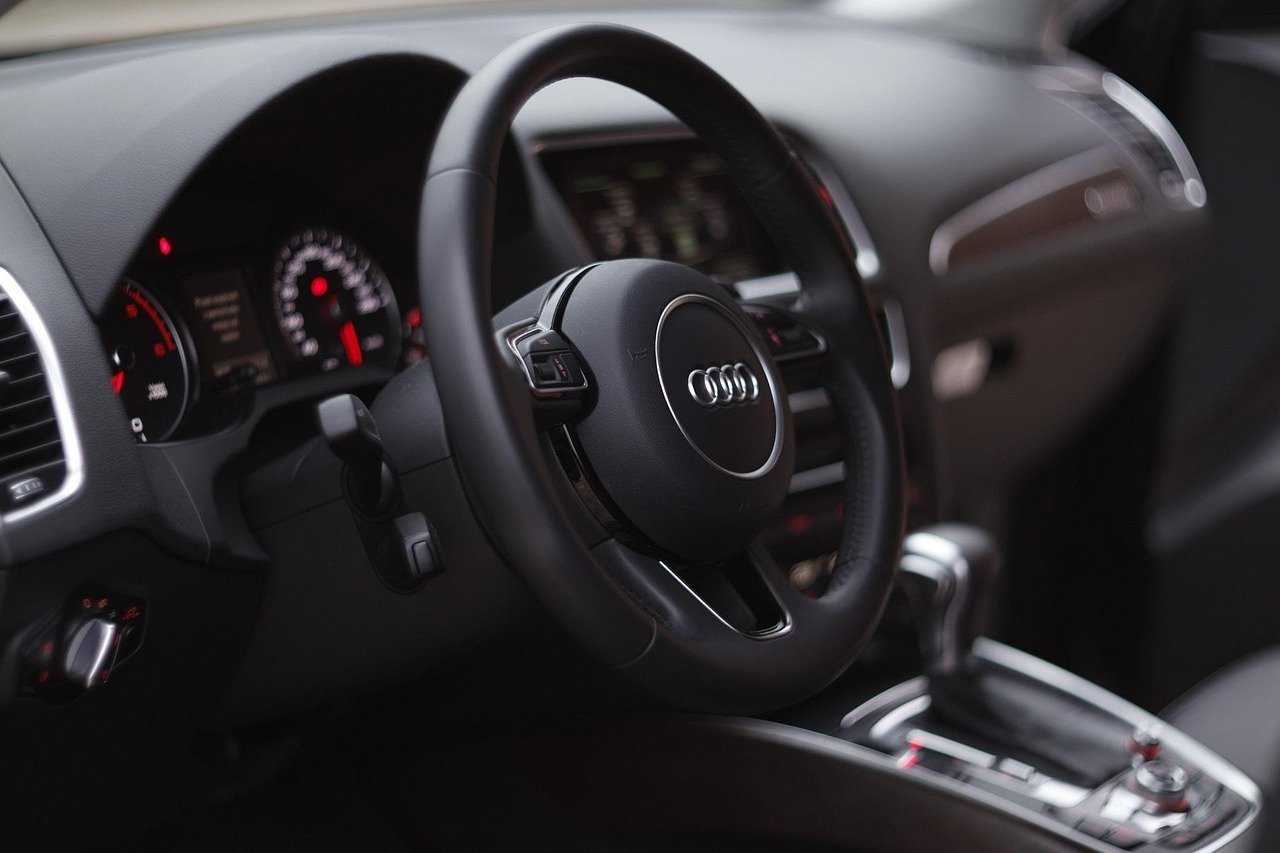
Audi is better on technology that you actually use. Their “Virtual Cockpit” (the digital screen behind the steering wheel) is the best in the industry. It puts the map right in your line of sight so you don’t have to look at the center console. It is beautiful, but if that screen glitches (which happens more as the car hits 7 or 8 years old), the car is almost impossible to use. Audi’s newer dual-touchscreen setups are fingerprint magnets and require you to look down away from the road to change the temperature.
BMW’s iDrive system is great if you like using a physical knob to control things, which is safer than a touchscreen while driving. BMW uses a physical rotary knob (iDrive) to control the screen. It feels “old school,” but it means you don’t have to take your eyes off the road to find a radio station. However, BMW interiors can feel a bit “samey.” A 3 Series interior looks almost exactly like an X5 interior, which can feel disappointing if you spent the extra money for a higher model.
Conclusion: BMW or Audi

Instead of asking which is “better,” ask yourself which bill you’d rather pay. Will you be more annoyed by a stiff ride every morning, or by a $2,000 “preventative” engine repair?
Buying a BMW means you are choosing a “driver’s car.” You are accepting higher repair bills and a stiffer ride in exchange for a car that feels alive when you go fast. Can you handle a car that demands your attention and needs its cooling system rebuilt every few years?
Buying an Audi means you are choosing a “luxury tool.” You get a car that works in all weather, has a beautiful interior, and is slightly cheaper to maintain, but it will never feel as sharp or aggressive as the BMW. Can you handle a car that feels a bit like a fast SUV even if it’s a sedan, but stays composed in a rainstorm?
“In my opinion, It depends on how you look at it. If you are a car enthusiast and you want to have fun on weekends, then you should go with BMW. But, if you are a family guy with tight financial conditions interested in nice sedan or coupe, then you should go with Audi.”